


Do you want to know how to paint on canvas? If you are a beginner in painting and are not familiar with the different art supplies that can help you, then you are in the right place because Panafargo brings you the best tricks and tips to learn how to paint on canvas from your home.
Panafargo is a stationery store with over 25 years of experience, currently located in the center of Medellín. Discover our art products and the various stationery items we offer.

What tools do you need to paint on canvas?
Now, before giving you some ideas to let your imagination flow, you need a basic guide to materials that can help you paint on canvas. Below is a list of art products:
- Canvas
- Brushes
- Palette knife
- Acrylic paints
- Oil paint
- Gesso
- Palette
- Rags
- Newspaper
- Glass of water
- Paint thinners
- Easels or surfaces
- Pencils
Painting Tips
At Panafargo, we always give you the most relevant information, which is why we want you to consider these tricks and tips to learn how to start painting on canvas. These tips are essential for preparing your space and for choosing the painting technique that best suits your needs.

- Choose a well-lit and cool place: It would be ideal if your workspace were a ventilated place that allows you to be comfortable for several hours, and it's important not to suffer interruptions while painting.
- Brainstorm ideas: This point is one of the most important because even though you can let yourself go on the canvas, it would be best to have a defined painting idea to have a design that serves as a guide or inspiration.
- Define what you are going to paint: Once you have defined the design, start by shaping the outline with a charcoal pencil.
- Apply the first layer of paint: This way, you will work on the background of the artwork, whether it is a landscape or an object. It is essential to start painting the most basic elements to gain confidence in your technique as the painting progresses.
- Stay true to your style: This is the most fun tip because you will discover your own painting style as you advance in the artwork.
You might be interested in: Kraft Paper in all sizes
How to choose the right brushes?
Choosing the right brushes is essential for a good painting experience. Brushes come in different shapes and sizes, each suitable for certain effects and techniques. For example, flat brushes are excellent for long, smooth strokes, while round brushes are ideal for fine details and precise lines. And fan brushes are used for blending and creating textures. It is important to have a variety of brushes to adapt to different needs.
Their quality is also important. Synthetic hair brushes are a good option for beginners because they are durable and work well with acrylic paints. Natural hair brushes, such as hog bristle or sable, are more expensive but offer superior softness and precision, especially with oil paints. Be sure to clean your brushes properly after each use to extend their lifespan.
Basic painting techniques
Starting with basic techniques will help you gain confidence and improve your skills. A fundamental technique is the gradient, which involves smoothly blending two colors to create a soft transition between them. Another technique is dry brushing, where an almost dry brush is used to apply a minimal amount of paint, creating a rough and granular texture.
Impasto is a technique that involves applying paint in thick layers to create texture and relief on the canvas. You can also try the wash technique, which involves diluting the paint with water to create a transparent effect similar to watercolor. Experimenting with these will allow you to discover which one best suits your style and preferences.
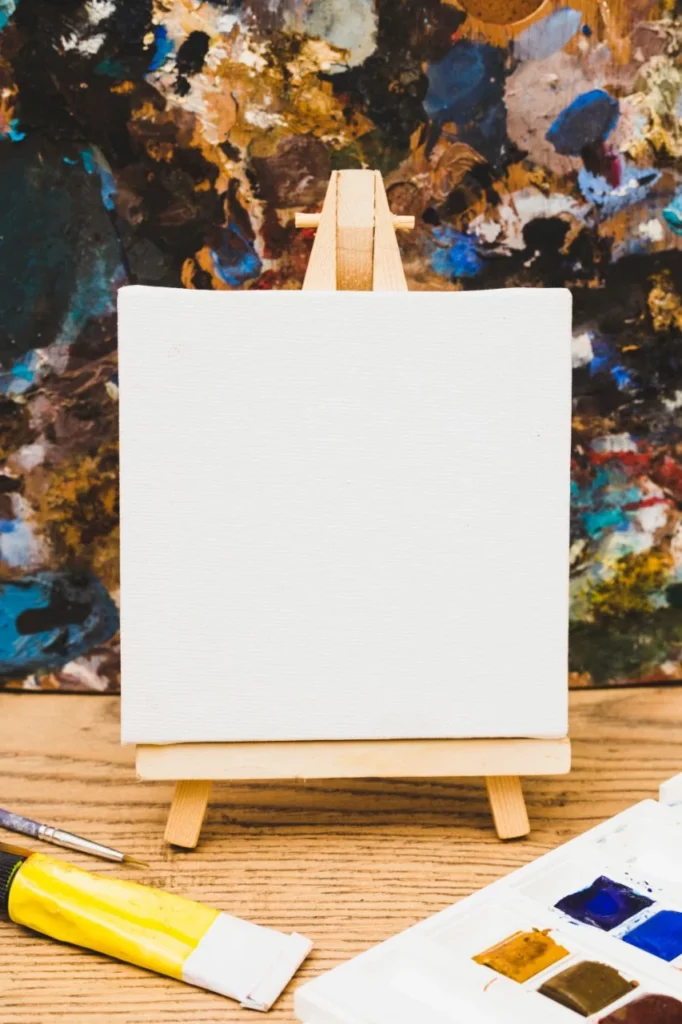
Step-by-Step Guide on How to Start Painting on Canvas
Painting on canvas is an incredibly rewarding artistic experience. If you're a beginner and want to know how to start, here's a detailed guide to help you take your first steps into the world of canvas painting.
1. Choose Your Canvas
The first step is to select the right canvas for your artwork. A canvas prepared for oil or acrylic paint is ideal, as both require a resistant surface. Choose a smooth canvas for detailed work and glazing techniques, or one with a medium texture if you prefer a more impasto style.
2. Prepare the Canvas
Before you start painting, it's essential to prepare the canvas. Apply a base layer, known as primer, to create a suitable surface. For acrylic paints, mix diluted paint with water and use a large brush to cover the entire canvas with broad, horizontal strokes. If you're working with oils, you can use gesso for priming.
3. Decide the Focal Point
The focal point of your painting is where you want the viewer to concentrate their attention. Avoid placing the focal point exactly in the center of the canvas. Instead, choose a slightly off-center area to create a more interesting composition. If you're painting a landscape, for example, place a striking element, such as a lake or a tree, slightly to the left or right of the center.
4. Create an Initial Sketch
Making a preliminary sketch on the canvas can help you better plan your work. Use a charcoal pencil or a thick drawing pencil to trace the main lines of your composition. You can do this directly on the canvas or transfer a drawing from a sheet of paper using transfer paper.
5. Apply the First Layer of Paint
Begin by applying an initial layer of paint, known as the base coat. Start with lighter, thinner colors, working from the top of the canvas downwards. If you're using acrylics, make sure the base coat is completely dry before adding more paint.
6. Add Layers and Details
Now it's time to start working on the details and additional layers. Apply thicker layers of paint and darker colors to create shadows and depth. Work on one section at a time and use smooth, even strokes. For finer details, use small, pointed brushes.
Common mistakes and how to avoid them
One of the most common mistakes beginners make is not properly preparing the canvas. Always apply a layer of primer (gesso) before you start painting to improve paint adhesion. Another mistake is using too much paint at once, which can lead to a mess and unwanted color mixing. Work in thin layers and let each layer dry before applying the next.
Lack of patience is another frequent mistake. Painting is a process that requires time and practice. Don't get discouraged if your first work doesn't turn out as you expected. Learn from every mistake and keep practicing. Finally, avoid overloading your palette with too many colors at once. Limit your palette to a few basic colors and learn to mix them to achieve a wider range of tones.
With these tips, you'll be well on your way to starting your canvas painting adventure. Remember that practice and patience are key to improving your skills and enjoying the creative process.
Find what you need with Panafargo!
If you need anything to carry out your artistic creations for painting on canvas, don't forget that you can find everything you need at Panafargo.
We are a stationery store with over 25 years of experience, currently located in the center of Medellín. Discover our art products and the various stationery items we offer.